On the 4th November 2024 my mum – Jane Clarke – and I headed to the American Fondouk just outside the medina of old Fes, and on the north side of the new city,
The establishment was founded in 1929 by a woman whose mother both had a fortune to leave, and who loved animals.
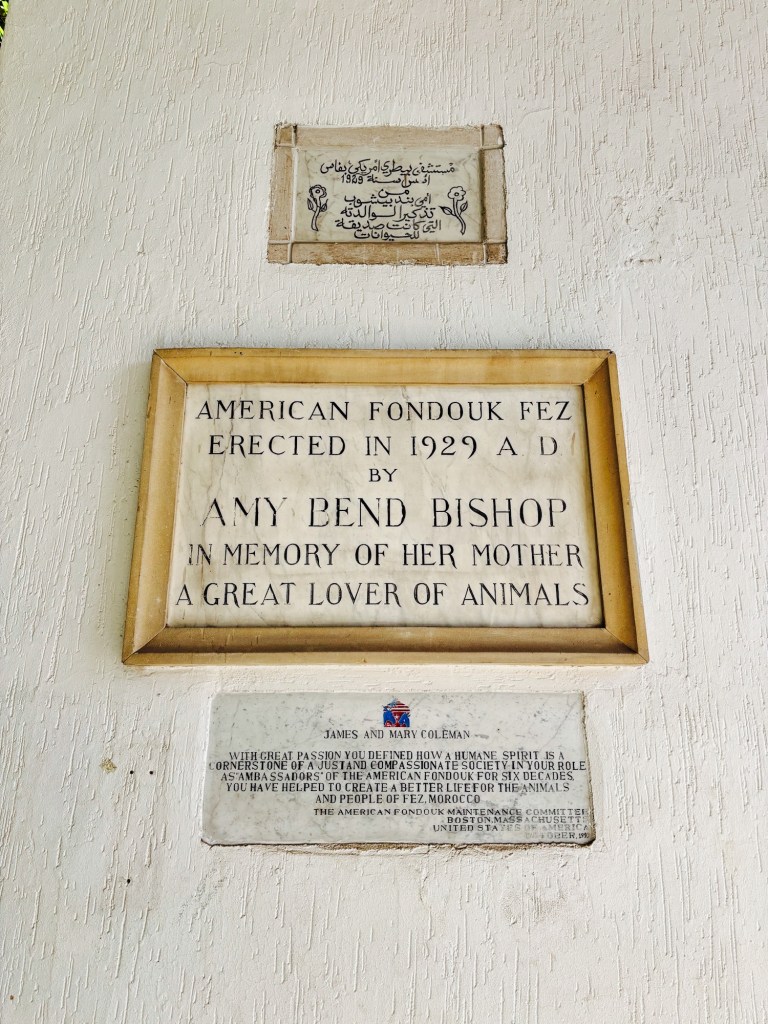
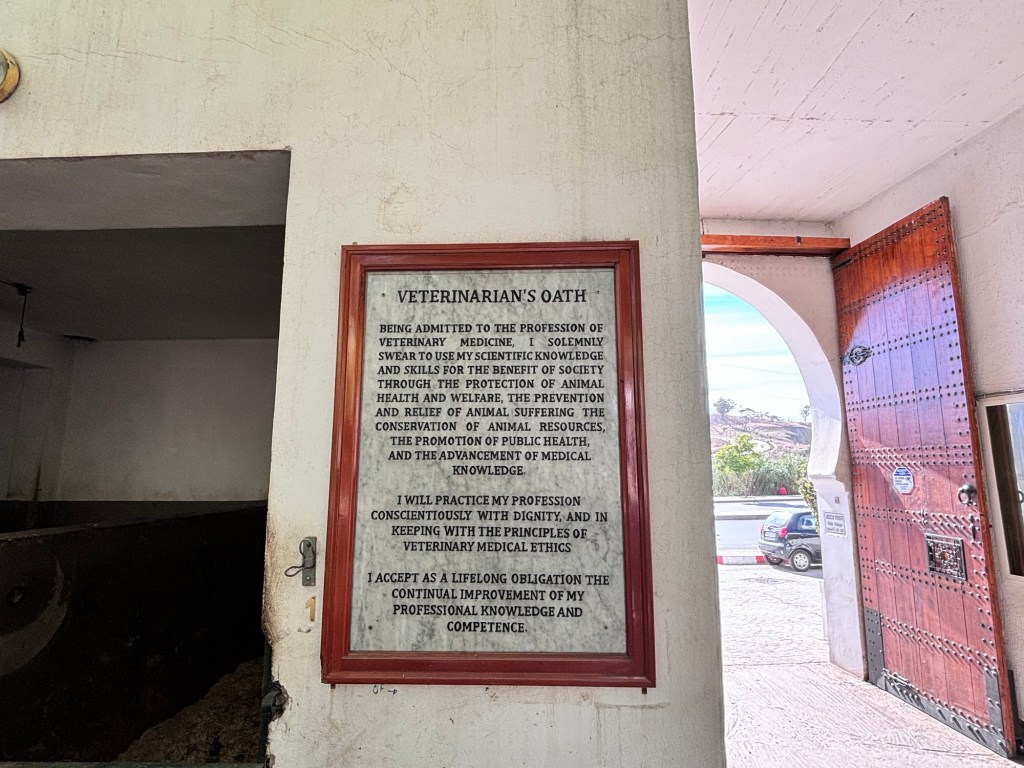
We had been in touch ahead of visiting and were told doors were open for visitors 8-12 Monday to Friday. We came down around 11am on the Monday morning, and found out that this was the time too that those working with their equids could bring their animals in need of treatment to be examined. Some (but not all) animals looked underweight and there was a weigh scale in the yard, showing that equid condition was a core part of assessments. As a woman more used to worrying about my horse being overweight I’m very aware that I’m coming to this with global north eyes!
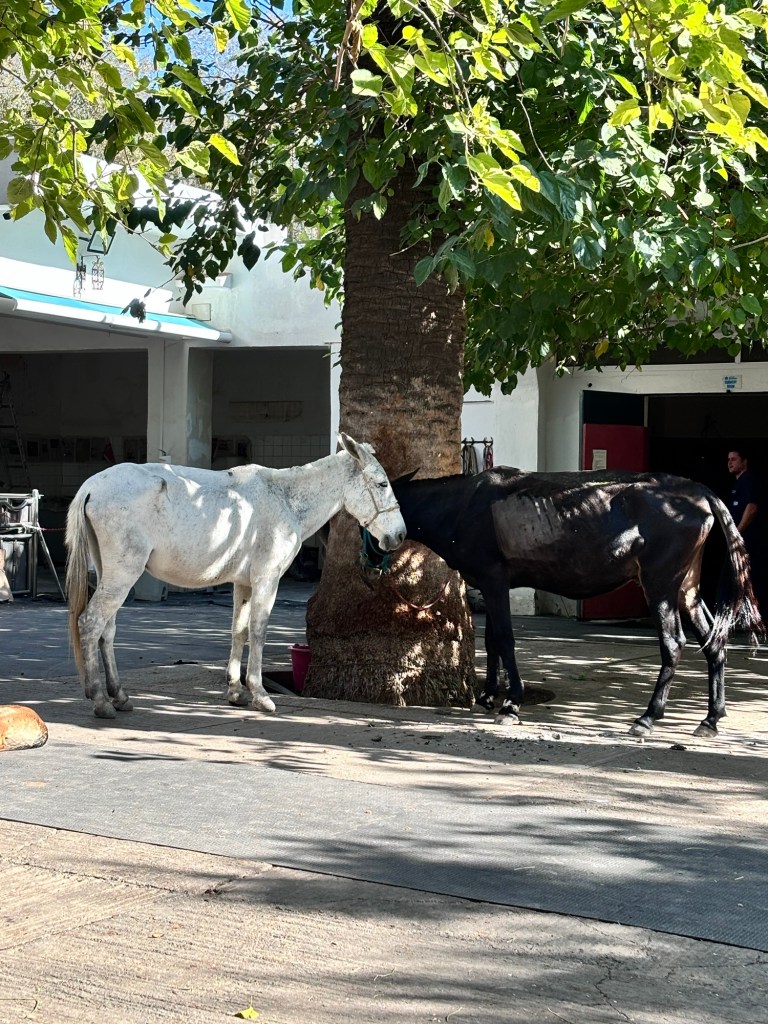
We were grateful to have time with vet Khouloud Tlili, who helped us understand the way in which the facility supported those working in Fes and why it is that so many people rely on equids as part of their work. The medina of Fes has no room for cars – and the narrow lanes mean that it is animals who bring much in and out of the thousands of alleyways bustling with the trading of crafts and food.
Economically then it is important for people to be able to access care for their working equid – who might be treated as an outpatient, or admitted to a stable for longer term care. As a worker, it seems mules have more value than donkeys (and then horses) in terms of the kind of the work that needed to be done. We didn’t spend time with mules on our visit, which might reflect that they were healthier / more robust? A hypothesis based on one visit!
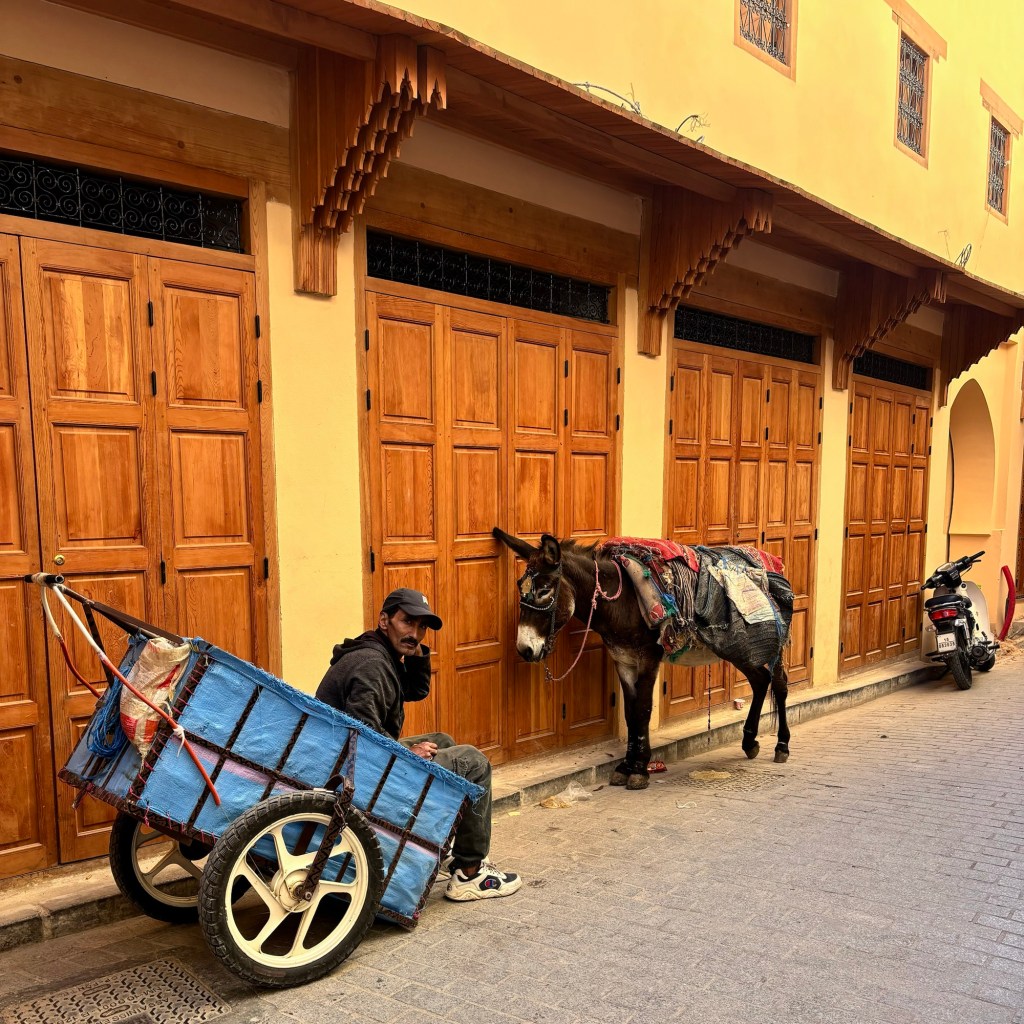
The care for the animals is to help also care for those working in the medina. Of course the veterinary work – including engaging with people – is different at the Fondouk (and other practices helping working equids) to that which takes place in many other settings (for example in the UK with people’s companion or sports horses having a different role in people’s lives).
Khouloud helped us to have an insight into this – putting the Fondouk in global context, with many vets (like her) coming from different national contexts and with different training and previous experience. Training opportunities in different countries and influences of different perspectives could be really interesting to hear more about: as a psychotherapist I am forever trying to make my (less diverse) learning relevant to the contexts I practice in, so I can only begin to imagine what that process means given the diversity of veterinary contexts people learn and work in!
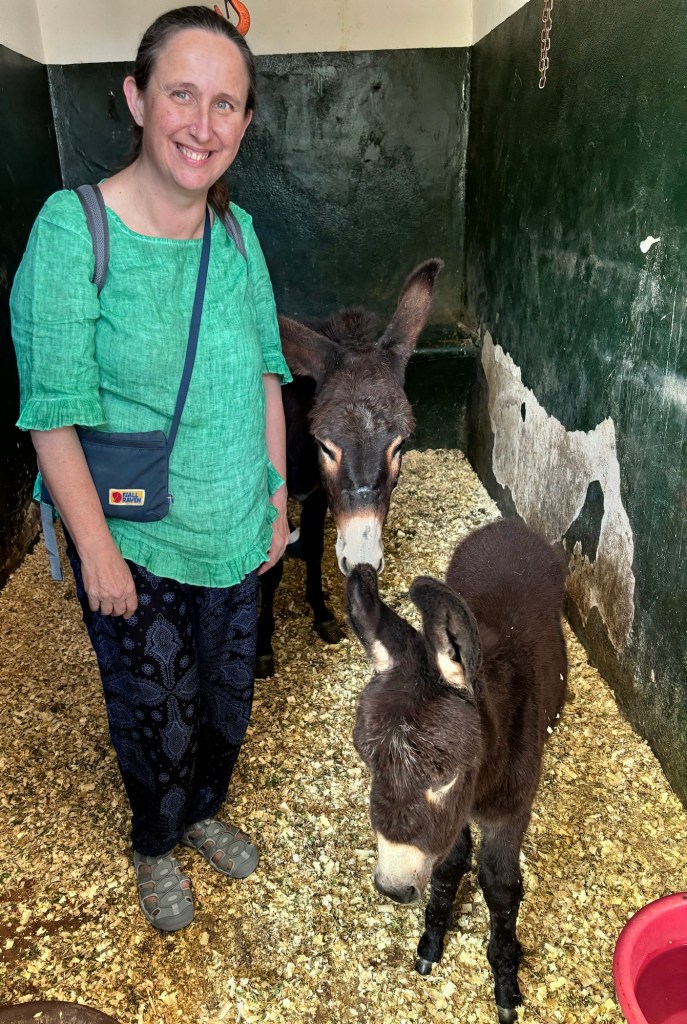
Whilst often the focus is on the balance between ensuring veterinary care and ensuring animals can return to work obviously there are times when animals cannot do so. We met a mother donkey who sadly has no prospect of life longer term but will be kept comfortable whilst her son weens. Her traumatic foot injury became infected and her hoof was not saveable. But they are doing well together currently and he will go to a non-working home.
This then is such a fabulous space in terms of the access to care that is possible – particularly given the role of the animals in people’s lives (and that of the communities they serve). A really interesting place too to think about care and relationships, and living with the limits of what can be done as well as celebrating the wonderful outcomes that can be achieved.
I’m grateful to have previously learned from colleagues about working equids having been part of seminar events in the UK (recorded here in an illustrated publication):
Wadham, H. , Monterrubio, C. and Dashper, K. (2023) Interspecies perspectives on decent work: inequalities and new solidarities in work between people and equids (part of The Sociological Review Seminar Series 2023).
Within this academic (and activist) space, Kendra Coulter’s writing is really important – her focus on solidarity with all workers makes sense to my interspecies sensibilities:
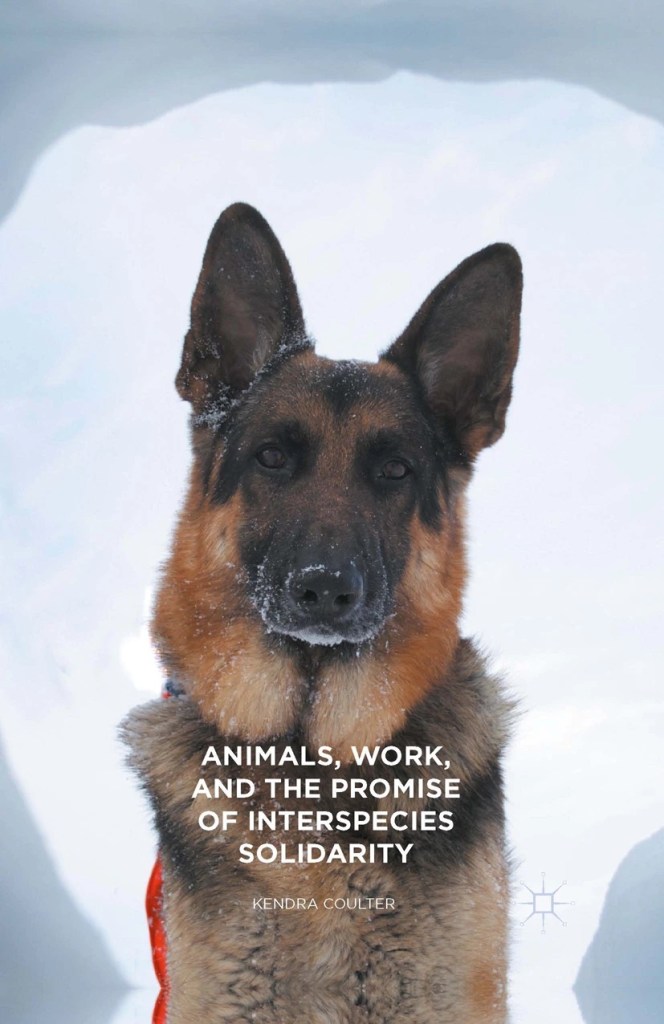
When it comes to working animals, there are some relevant podcasts out there, and a good place to start is Kendra Coulter on the Sentientism podcast.
Panning out a bit, before I visited the American Fondouk – as a tourist visiting my niece in Fes – I listened to another Sentientism podcast whilst relaxing on the roof of our Riad. For those interested in religion and approaches to the living in the ‘more than human’ world I recommend Altamush Saeed on Islam and animal rights (promoting an interspecies and vegan perspective).
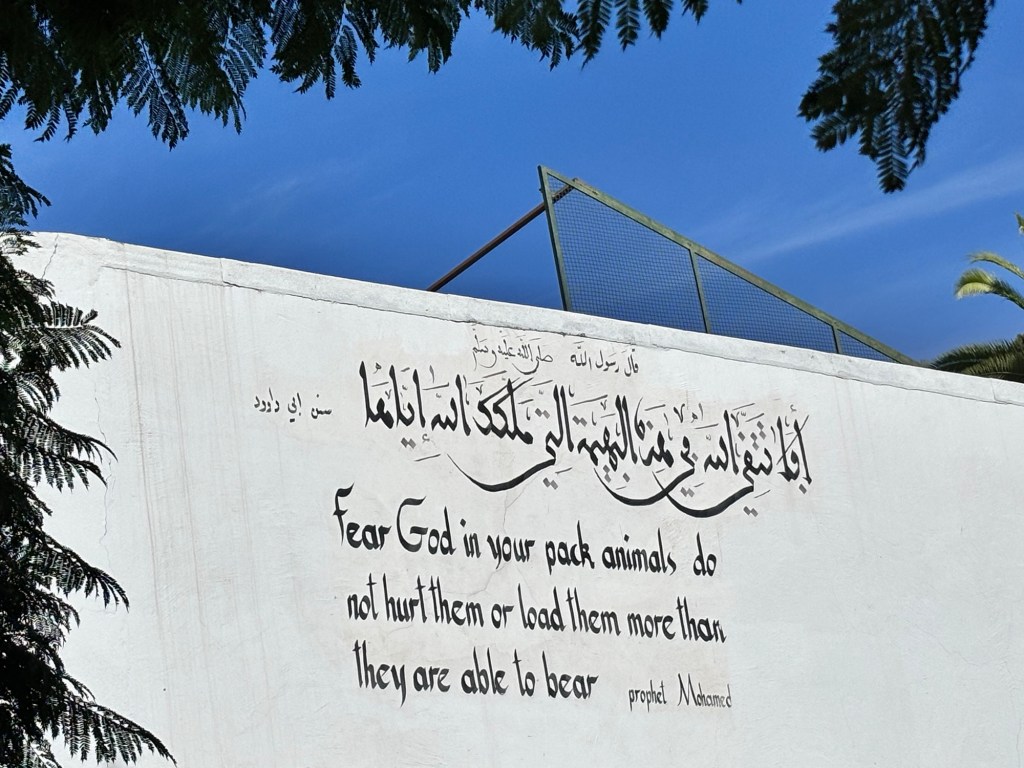
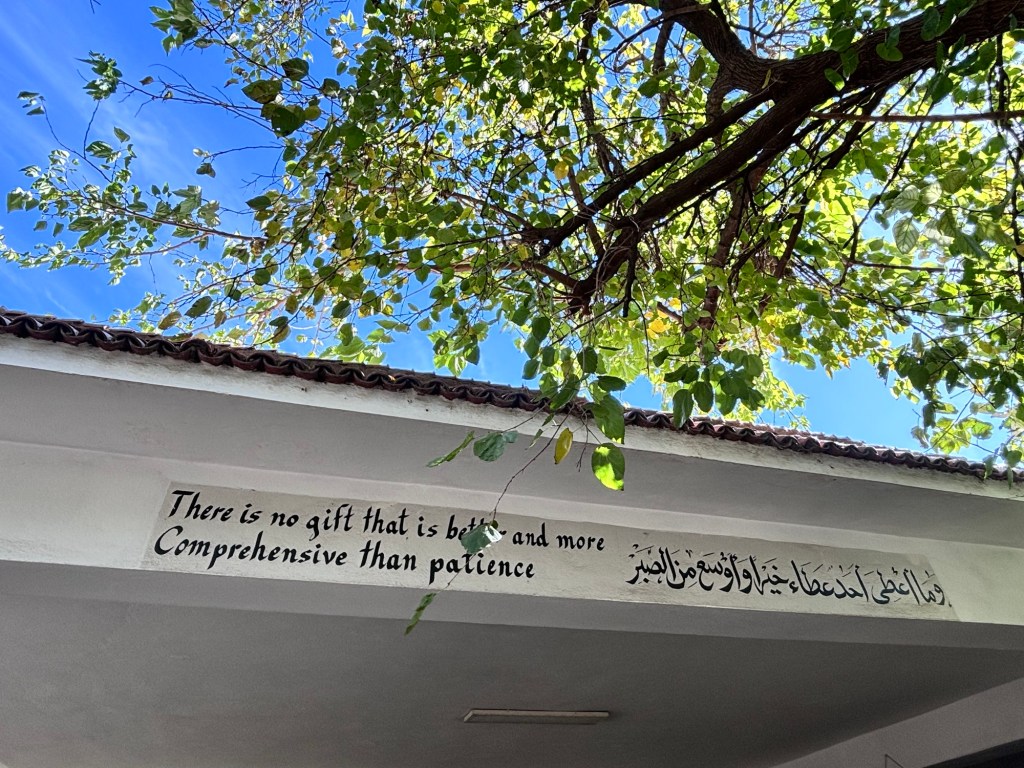
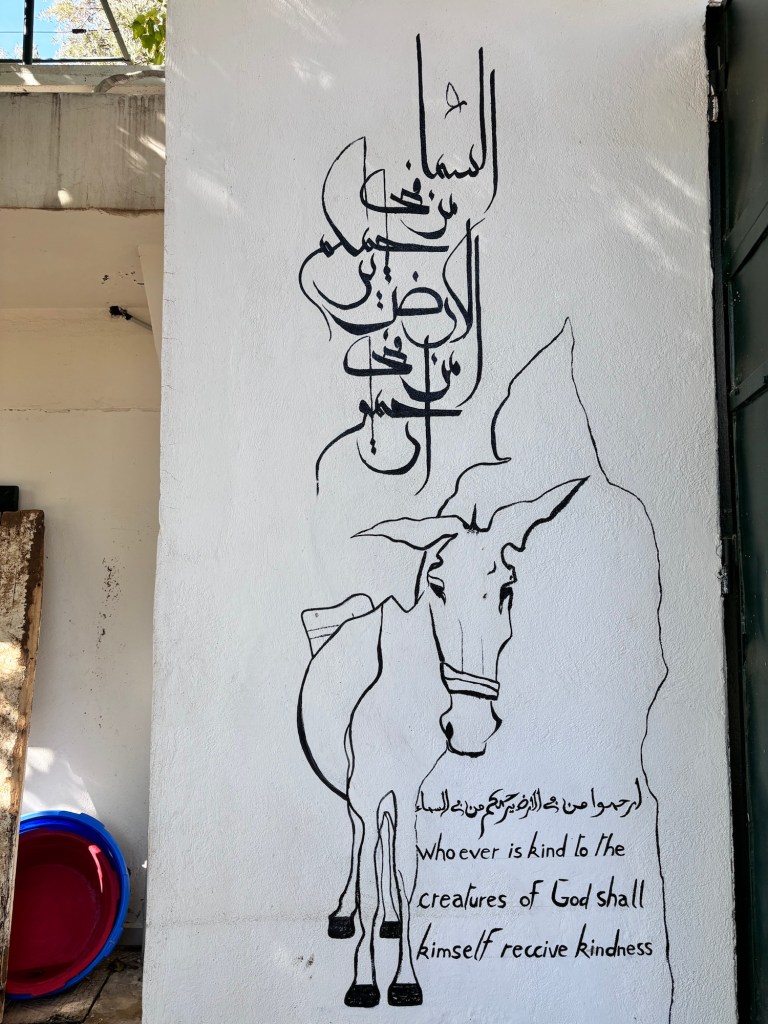
Whilst interspecies interests are for me not part of a formal religious tradition I have a lot of respect for and gain a sense of solidarity with other humans through seeing these expressions of care and – I think – love.
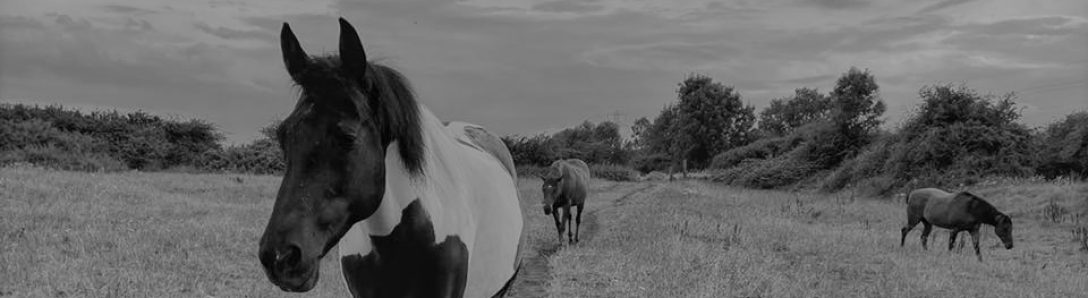
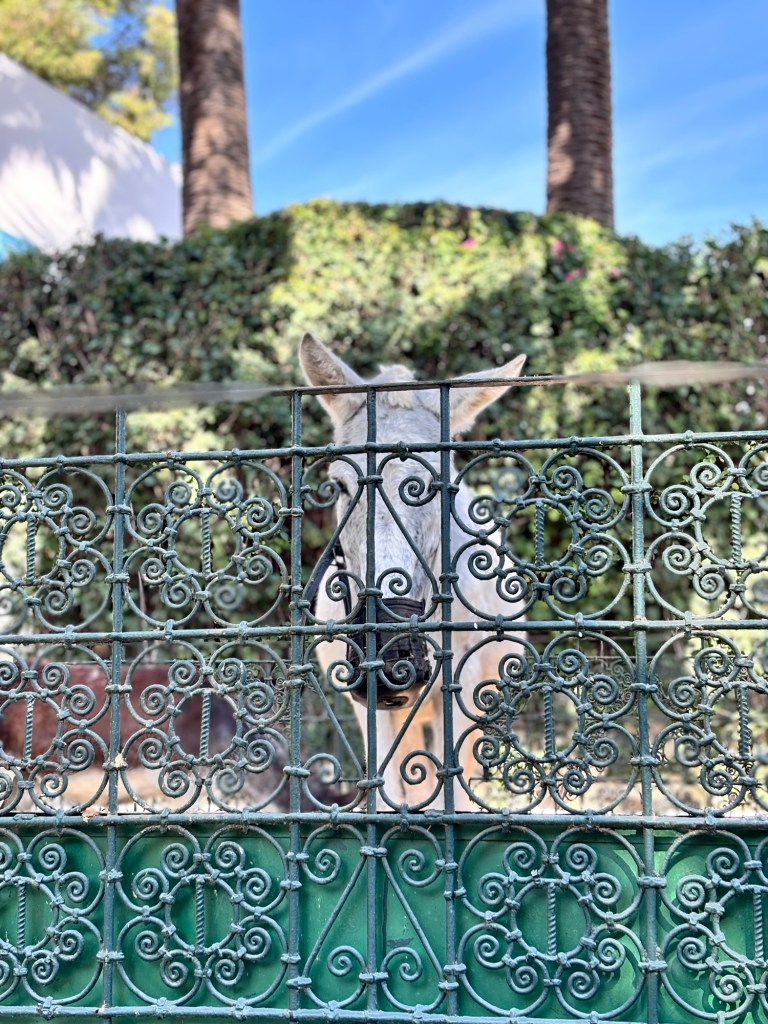
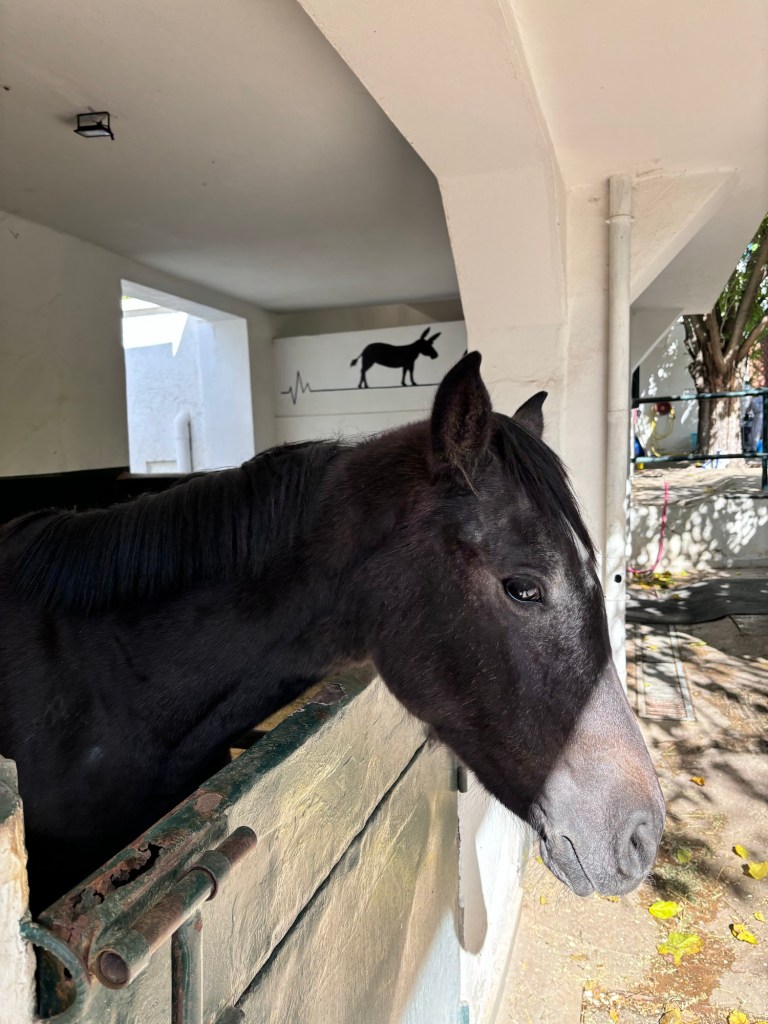
Finally I had a moment with this pony, aware that my horse was being cared for hundreds of miles north by her livery yard people and my friends. Humans around the world connect with these domesticated equids – for yes, a range of different purposes – and yet there is possibly more of what is shared to be explored as well as what is different.
I am in the early part of a journey of thinking about working equids. I first sat on a horse 7 years ago as my veganism (since 1990) had kept me back from following a curiosity in whether I could engage with horses. Whilst I do ride I don’t take for granted the horse’s labour to carry me, and believe I have a responsibility not just to provide care but to constantly question what I could improve (as I think makes sense for all relationships!).
I wonder if there are interesting questions to ask about working equids in the alleys of Fes, and on tourist trails. What about those around the world in sports, in riding schools, or even in equine assisted services. I’m always looking for connections and suggestions – so do let me know if this is something that matters to you too. Here online or shout if there are conferences or other opportunities to connect. I’m planning to head to the Equine Cultures in Transition conference in Manchester, the first week of June 2025, so hopefully will be meeting others with these interests there!
 Interspecies Insights